
Leak Detection
Leak Detection in Troutdale: Find Hidden Leaks Before They Cause Damage
Honest, reliable plumbing for Troutdale, Oregon and the east side of Multnomah County.
CCB# 257405
Licensed · Bonded · Insured
20 Yrs
Experience
Family
Owned & Operated
Troutdale, OR
East County Crew
What's Covered on This Page
- Signs You Have a Hidden Water Leak
- When a Dripping Faucet Is Not a Hidden Leak
- How Non-Invasive Leak Detection Works
- Urgent Leaks vs. Leaks That Can Wait
- What Drives Leak Detection Cost
- How do I know if I have a hidden leak or just a dripping faucet?
- What does non-invasive leak detection involve?
- Why do older Troutdale homes seem more prone to hidden leaks?
- Does Troutdale's rainy weather make leaks harder to find?
- Is a leak always an emergency that needs immediate attention?
- Can a slab leak really be found without breaking up my floor?
Need Leak Detection in Troutdale?
Leak Detection
How Non-Invasive Leak Detection Works
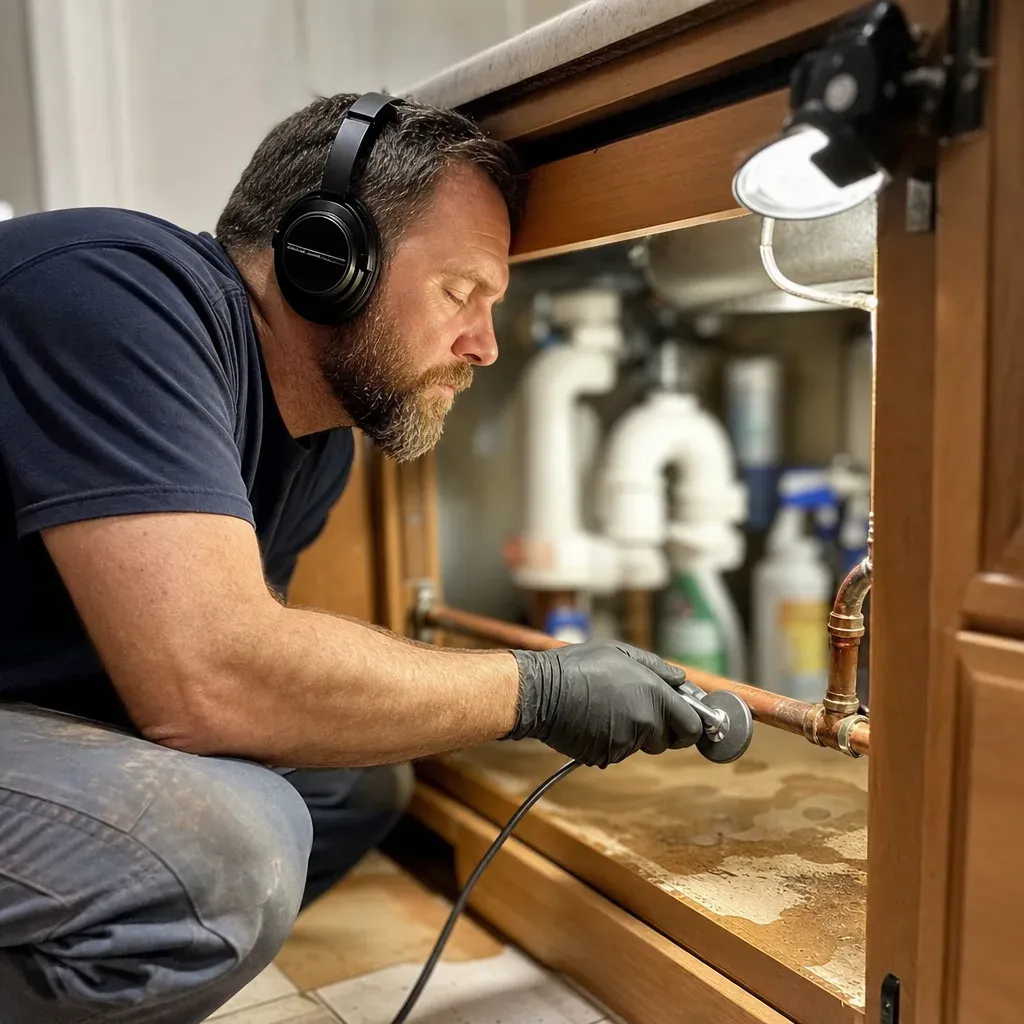
We're not out there swinging a hammer at your drywall hoping to get lucky. That's an old-school way of doing things, and it costs you way more in repairs than the leak itself ever would. We use equipment that listens, measures, and reads temperature changes to find the leak without opening up your whole wall or slab first.
So what does a visit look like? It starts simple.
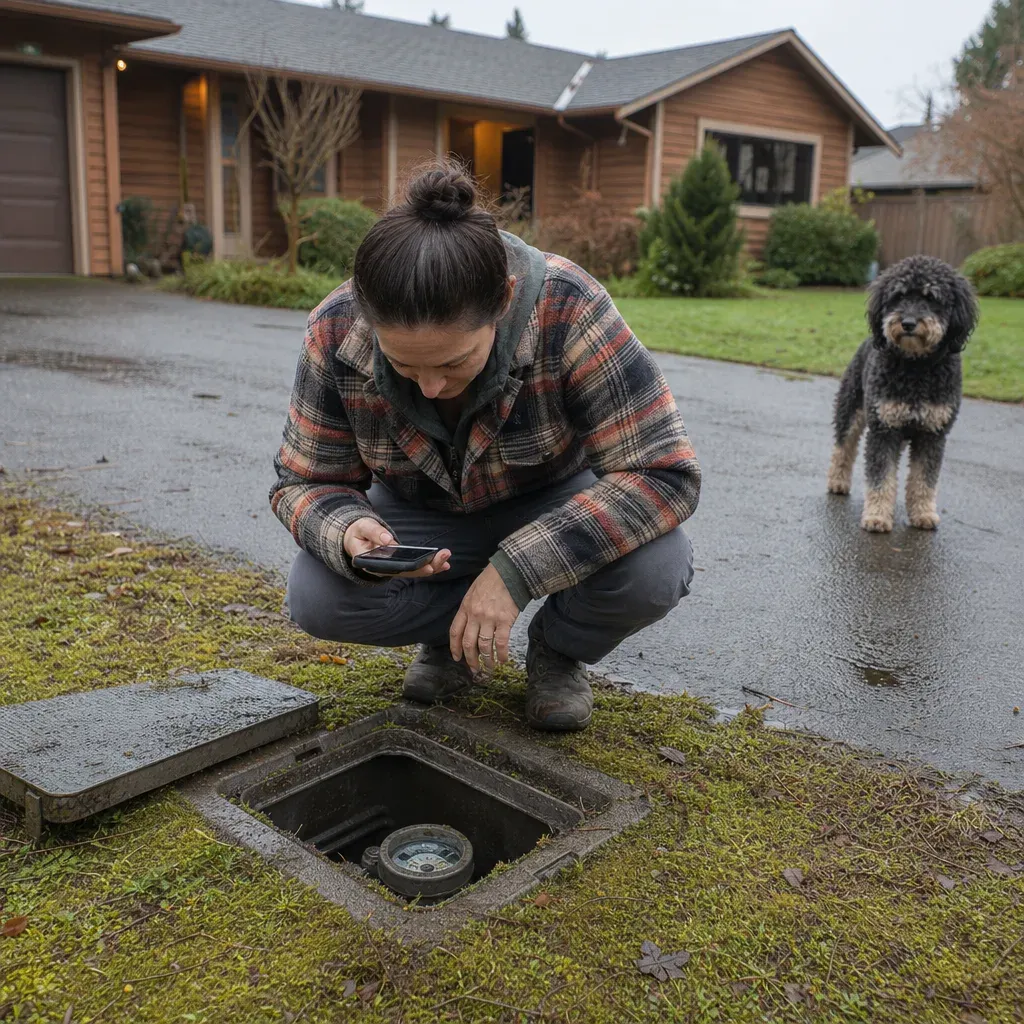
- We check your water meter and pressure first, this tells us if there's a leak at all and roughly how big it is.
- Acoustic listening equipment picks up the sound water makes moving through a pipe under pressure, even behind concrete or drywall.
- Thermal imaging spots temperature differences in the floor or wall where water is soaking into material it shouldn't be touching.
- For slab leaks common in older Troutdale homes near the river bottoms, we may use tracer gas to pinpoint the exact spot before anyone touches a tool.
- Once we've got a location marked, we confirm it, then we tell you exactly what needs to happen next.
Homes off Historic Columbia River Highway and near the older sections of town tend to have galvanized or early copper lines, and those pipes pit and pinhole from the inside out. Non-invasive detection finds that pinhole without cutting a trench across your yard or ripping out a bathroom floor to go looking, and once it's marked, a targeted plumbing leak repair on that one section of pipe is usually all it takes.
Most of the time, we find it in one visit. And when we mark that spot, that's the only spot getting opened up, not a whole wall on a guess.
Leak Detection
Urgent Leaks vs. Leaks That Can Wait
Not every leak is a five-alarm fire. Some are, though, and knowing the difference saves you money and stress.
A burst pipe or a slab leak pushing water up through your flooring is an emergency. Water pouring from a wall, a ceiling stain that's spreading while you watch, or a spike in your water bill with no clear reason, those need attention fast. Frozen pipes during a cold snap in Troutdale can crack overnight and turn into a burst pipe by morning. That's not a wait-and-see situation, that's an emergency plumbing repair call for your Troutdale home.
On the other end, a slow drip under the kitchen sink or a toilet that runs a little longer than it should isn't an emergency. It's annoying, it's wasting water, but your house isn't at risk tonight. You can call during regular hours and get it handled without losing sleep over it.
- Call right away: standing water, a burst pipe, water near electrical outlets or panels, a ceiling that's sagging or dripping
- Call soon, not urgent tonight: a musty smell in one room, a water bill that jumped without explanation, a faint hiss behind a wall
- Can wait for a scheduled visit: a slow faucet drip, a toilet that occasionally runs, minor pressure changes you've noticed for weeks
We get calls at both ends of that spectrum, and we'd rather you call and it turn out to be nothing than wait and let a pinhole leak become a wall repair. If you're not sure which category you're in, that's normal. Just call and describe what you're seeing.
Leak Detection
What Drives Leak Detection Cost
Leak detection pricing isn't one flat number. It moves based on how hard the leak is to find and how much digging, cutting, or crawling it takes to get there. A leak dripping under a visible sink trap is a quick fix. A leak inside a slab foundation or buried under your yard is a different job entirely, and it takes different tools.
Here's the honest breakdown of what moves the cost up or down on a leak detection job.
- Location of the leak: a wall or crawlspace leak takes longer to trace than an exposed pipe under a sink
- Type of pipe: old galvanized pipe corrodes from the inside and can hide several small leaks at once, not just one
- Access: a leak under a slab foundation needs different equipment than one behind drywall
- How long it's been leaking: a fresh leak is usually cleaner to trace than one that's soaked into insulation or framing over months
- Whether it's connected to a bigger issue: sometimes a leak points to a pressure problem or aging pipe that needs more than a patch
We don't guess on this stuff. Before we touch anything, we walk you through what we're seeing and why we think the leak is where we think it is. No surprise add-ons, no pressure to fix five things when you called about one. If the leak turns out to be one symptom of pipe that's failing everywhere, we'll say so, and you can look over the repiping and pipe replacement services we offer in Troutdale before deciding anything.
Ask any plumber these questions before you hire them for leak detection: how do they find the leak without tearing up your whole floor, do they charge extra to give you a written explanation of what they found, and will they show you the actual problem before starting repair work. A straight answer to those three questions tells you a lot about who you're hiring.
The real cost of a leak isn't the detection call. It's what happens when nobody makes that call for six more months.
Common Questions
Frequently Asked Questions
How do I know if I have a hidden leak or just a dripping faucet?
+
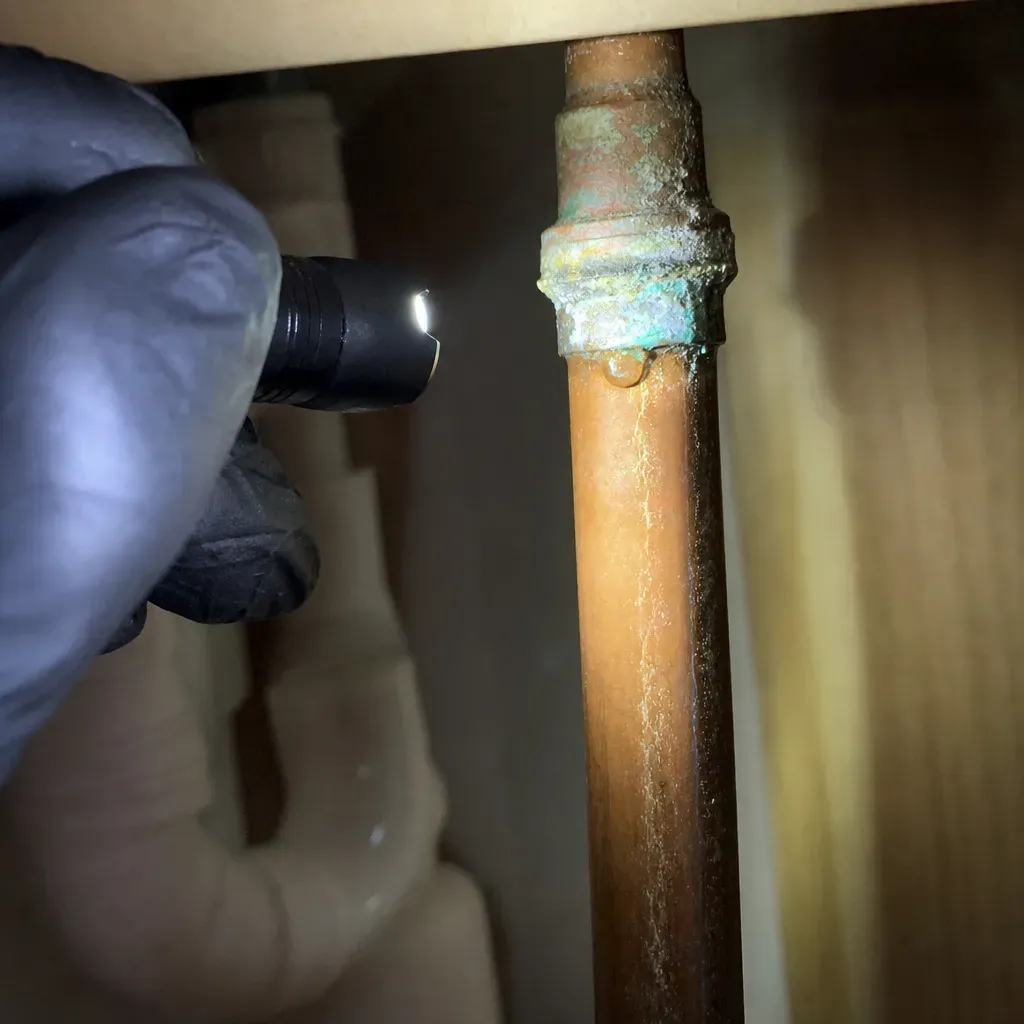
A hidden leak usually shows up as a higher water bill, a warm spot on the floor, or a musty smell with no obvious cause. A dripping faucet is easy to spot and drips right at the fixture. Try this test: check your water meter, wait two hours without running water, then check it again. If the meter moved, something is leaking where you can't see it.
What does non-invasive leak detection involve?
+
It means finding your leak without tearing open walls or digging up your yard first. We start by checking your water meter and pressure, then use acoustic listening equipment to hear water moving through pipes under pressure. Thermal imaging spots temperature changes where water is soaking into flooring or walls. For tougher slab leaks, tracer gas helps pinpoint the exact spot before anyone opens anything up.
Why do older Troutdale homes seem more prone to hidden leaks?
+
Many homes near Historic Columbia River Highway and the older sections of town still have galvanized or early copper pipe. That pipe corrodes from the inside out, so a pinhole leak can form with no visible sign until damage has already started. If your home was built before PEX and copper became standard, it's worth watching your water bill closely for unexplained jumps.
Does Troutdale's rainy weather make leaks harder to find?
+
Yes, wet ground during fall and winter can hide an outdoor leak in plain sight. A soggy patch of yard often looks like normal runoff, but it can be a broken water line feeding your house. We see this every week during the rainy season, so if a wet spot in your yard sticks around after the rain stops, it's worth getting checked.
Is a leak always an emergency that needs immediate attention?
+
No, not every leak needs a same-day call. A burst pipe, water pouring from a wall, or a spreading ceiling stain is an emergency and needs fast attention. A slow drip under the sink or a toilet running a bit long can usually wait for a scheduled visit. Frozen pipes during a cold snap are the exception, since they can crack overnight and turn into a real emergency by morning.
Can a slab leak really be found without breaking up my floor?
+
Yes, and that's the whole point of proper leak detection equipment. Acoustic tools, thermal imaging, and tracer gas let us narrow down the exact spot before any flooring gets opened up. Once we mark that location, that's the only spot that gets touched, not a whole slab on a guess. Most of the time we find the leak in one visit.
Troutdale, Oregon
More Plumbing Services in Troutdale
Need Plumbing Help?
Get Help Today from
Bigfoot Plumbing
Troutdale, Fairview, Wood Village, Gresham and the homes east toward Corbett. Call the Troutdale number and talk to someone who does this for a living.
10% Off for Veterans · First Responders · Seniors