
Water Filtration
Whole-House Water Filtration Installation in Sandy
Clean water starts at the main line. Honest, reliable plumbing for Sandy, Oregon & the surrounding Pacific Northwest.
CCB# 257405
Licensed · Bonded · Insured
20 Yrs
Experience
Family
Owned & Operated
Sandy, OR
Local Crew
What's Covered on This Page
- Municipal Water and Private Wells Need Different Filtration Fixes
- Signs Your Water Needs a Whole-House System
- When a Point-of-Use Filter Is All You Need
- How Whole-House Water Filtration Installation Works in Sandy
- What Drives Installation Cost and Permit Requirements
- How do I know if my water in Sandy needs a whole-house filtration system?
- How fast can you come test my water and give me a plan?
- What happens when you come out to install a whole-house system?
- Does it matter if I'm on well water or city water in Sandy?
- Is a whole-house system overkill if only one faucet tastes bad?
- How long does a whole-house filtration installation take?
Need Whole-House Water Filtration in Sandy?
Water Filtration
Municipal Water and Private Wells Need Different Filtration Fixes
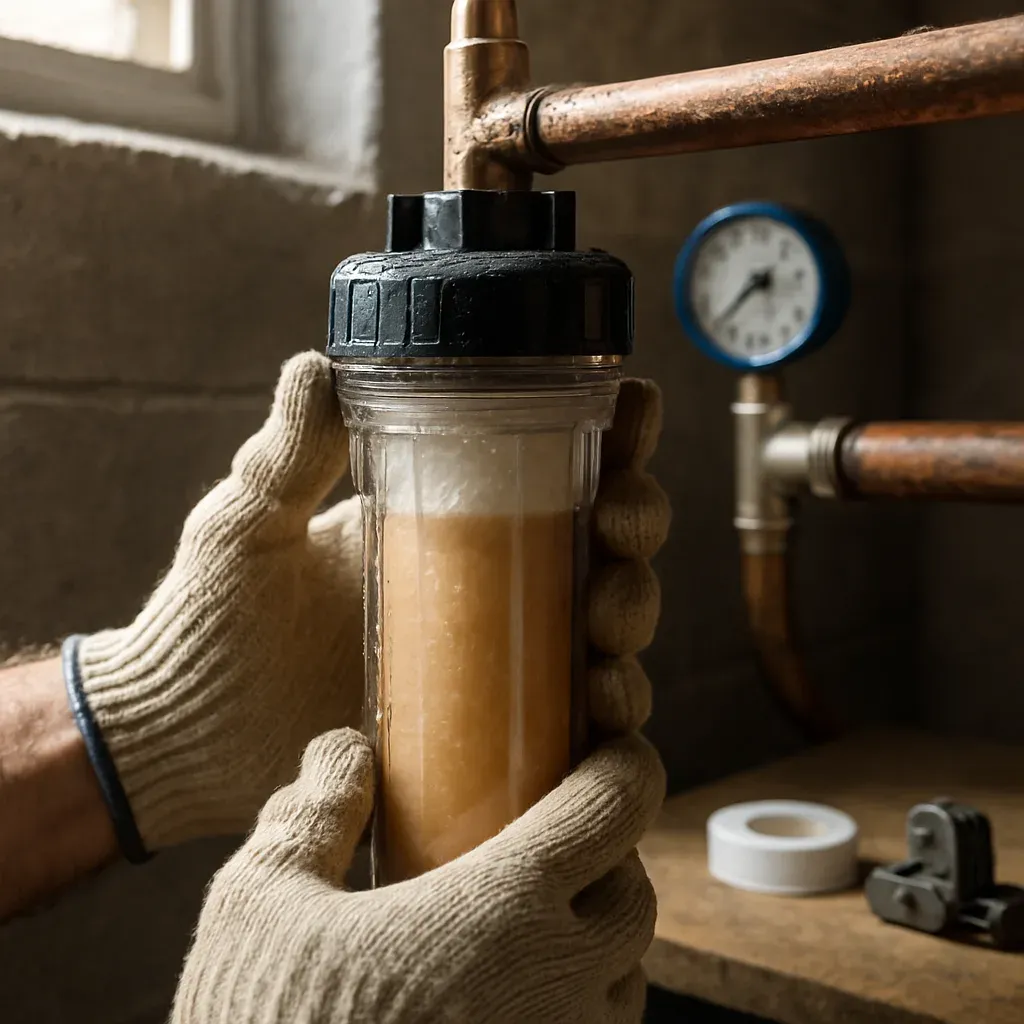
Quick Summary: City water and well water carry different problems, so they need different filtration setups. Municipal water usually needs a system built around chlorine taste and sediment, while well water often needs something for iron, manganese, or hardness. Guessing at a system without testing the water first almost always leads to the wrong fix.
Sandy sits in a spot where you'll find both. Inside city limits, most homes run on municipal water. Head out toward the more rural stretches near Sandy, and a lot of properties pull from private wells instead. That split matters more than people think.
Municipal water in this area is treated before it ever reaches your tap, but treatment doesn't mean perfect. Chlorine gets added to keep the water safe in transit, and it can leave a taste or smell some folks can't stand. Sediment can also show up after line work or seasonal shifts in demand.
Well water is a different animal entirely. Groundwater around the foothills near Sandy often carries iron and manganese from the soil it passes through. That's the stuff that stains sinks orange or leaves a metallic taste. Hardness is common too, and it builds up in pipes and water heaters over years.
- Municipal water: chlorine taste and odor, occasional sediment after main breaks or flushing
- Well water: iron and manganese staining, hardness scale buildup, sometimes sulfur smell
- Both sources can carry sediment, but the cause and fix are rarely the same
We test before we ever recommend a setup. Skip that step, and you're just guessing, and guessing gets expensive.
Water Filtration
Signs Your Water Needs a Whole-House System
Most Sandy homeowners don't wake up thinking about water chemistry until something changes. A toilet tank turns rusty, a glass of water smells like rotten eggs, or the coffee maker suddenly needs descaling every few weeks. These sensory clues are your household's early warning system, and in the foothill basalt aquifers common along the Mt. Hood corridor, they often point to naturally elevated iron and manganese levels rather than contamination from surface pollution. That distinction matters because it changes what kind of filtration equipment solves the problem.
- Orange, brown, or reddish staining on sinks, tubs, or laundry, usually from dissolved iron oxidizing on contact with air
- A sulfur or rotten-egg odor, typically hydrogen sulfide gas from manganese-bearing groundwater or well casing bacteria
- A strong chlorine taste or smell, common on municipal Sandy connections during seasonal treatment adjustments
- White, chalky scale buildup on faucets, shower doors, and water heater elements, a sign of hard water minerals
- Grit or sediment clogging faucet aerators and showerheads within weeks of cleaning them
Because much of Sandy sits atop volcanic basalt formations shaped by Mt. Hood's geologic history, well water here frequently tests high for iron and manganese even when the source is otherwise clean and safe to drink. This is different from contamination issues seen in other regions, and it means a whole-house filtration or oxidation system built specifically for metals removal often outperforms a generic carbon filter.
Not every sign carries the same urgency. Sudden discoloration that appears overnight, a strong sulfur smell that wasn't there last week, or a noticeable change in water pressure alongside staining should be treated as urgent. These shifts can indicate a failing well pump, a cracked casing, or a rapid change in aquifer conditions, and they're worth a same-week inspection. On the other hand, mild chlorine taste, occasional light scale, or a faint mineral smell that's been consistent for months are can-wait issues. They're worth addressing, but they won't damage your plumbing or appliances if you take a few weeks to plan the right system.
Water Filtration
When a Point-of-Use Filter Is All You Need
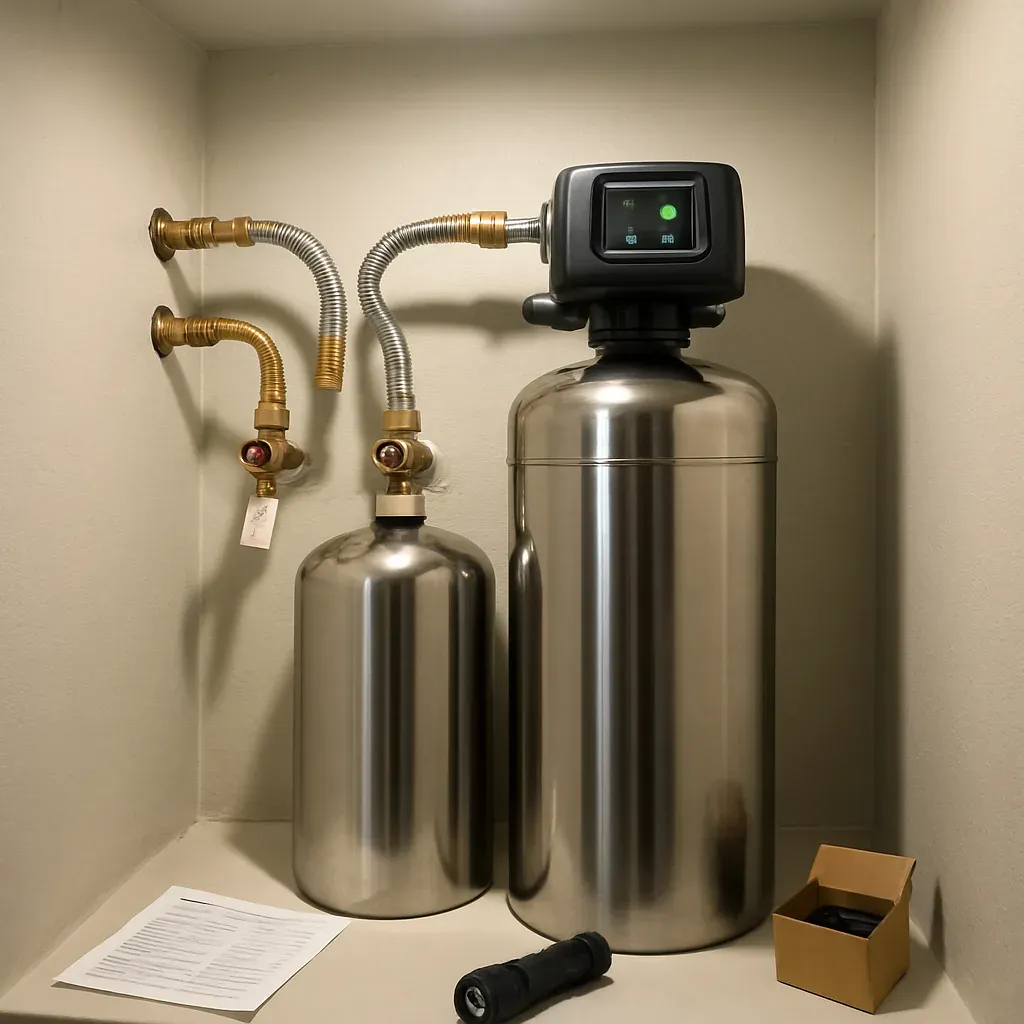
Not every water complaint in Sandy calls for a whole-house solution. We've walked into plenty of homes out toward Marmot or Bull Run expecting to recommend a full system, only to find the real issue is isolated and easy to fix. If your water tests clean for hardness, iron, and sediment but one faucet still tastes off, a pressurized whole-house tank is overkill. A good plumber will tell you that before selling you one.
- Single-fixture taste or odor complaints, like chlorine taste only at the kitchen sink, usually mean a $150-$300 under-sink carbon filter or reverse osmosis unit will solve it completely.
- Renters in Sandy apartments or leased homes who can't get landlord approval for plumbing modifications can still get great results from a countertop pitcher or a faucet-mount filter that requires no installation.
- A water test showing normal hardness (under 7 grains per gallon), no detectable iron, and clear sediment readings means the City of Sandy's municipal supply is already doing its job, and a whole-house system would be treating a problem that doesn't exist.
- Households only concerned about drinking water quality, not scale on fixtures or appliance buildup, often get everything they need from a two-stage under-sink system for a fraction of whole-house cost.
- Short-term residents or those planning to move within a year or two rarely see a return on a whole-house investment when a portable option handles their immediate concern.
This distinction matters because whole-house systems run $2,000 to $5,500 installed depending on equipment, while point-of-use filters range from $20 for a pitcher to a few hundred dollars for a quality under-sink RO unit. Recommending the bigger system when it isn't needed doesn't just waste money, it can also mean unnecessary softener salt use or wasted RO reject water for a problem that was never systemic.
The only way to know which category you fall into is a real water test, not a guess based on how your skin feels after a shower or a stain you noticed once. We run hardness, iron, pH, and sediment tests on every Sandy service call before recommending anything, and we'll say plainly when a countertop filter is the smarter, cheaper answer.
Water Filtration
How Whole-House Water Filtration Installation Works in Sandy
A proper whole-house water filtration installation in Sandy starts long before any pipe is cut. The process begins with a water test that measures hardness, sediment, iron, pH, and any contaminants specific to your source, whether you're on Sandy's municipal supply or a private well common in areas like Marmot or Bull Run's outskirts. Technicians also review household usage: number of occupants, peak demand times, and whether you run irrigation or well-fed livestock lines that shouldn't pull from the filtered system.
Once test results are in, the filtration system is matched to your specific water chemistry and flow rate needs, rather than installing a generic unit. A high-iron well might call for an oxidizing filter paired with a softener, while municipal water with chlorine taste issues may only need a carbon-based whole-house filter. Undersizing a unit for household demand leads to pressure drops; oversizing wastes money, so this matching step is critical.
Because Oregon plumbing code requires a permit for any alteration to a potable water system, a licensed installer will file for the permit before work begins. This isn't optional paperwork, it protects you if you sell the home later and ensures the installation meets backflow prevention and cross-connection standards inspectors check for.
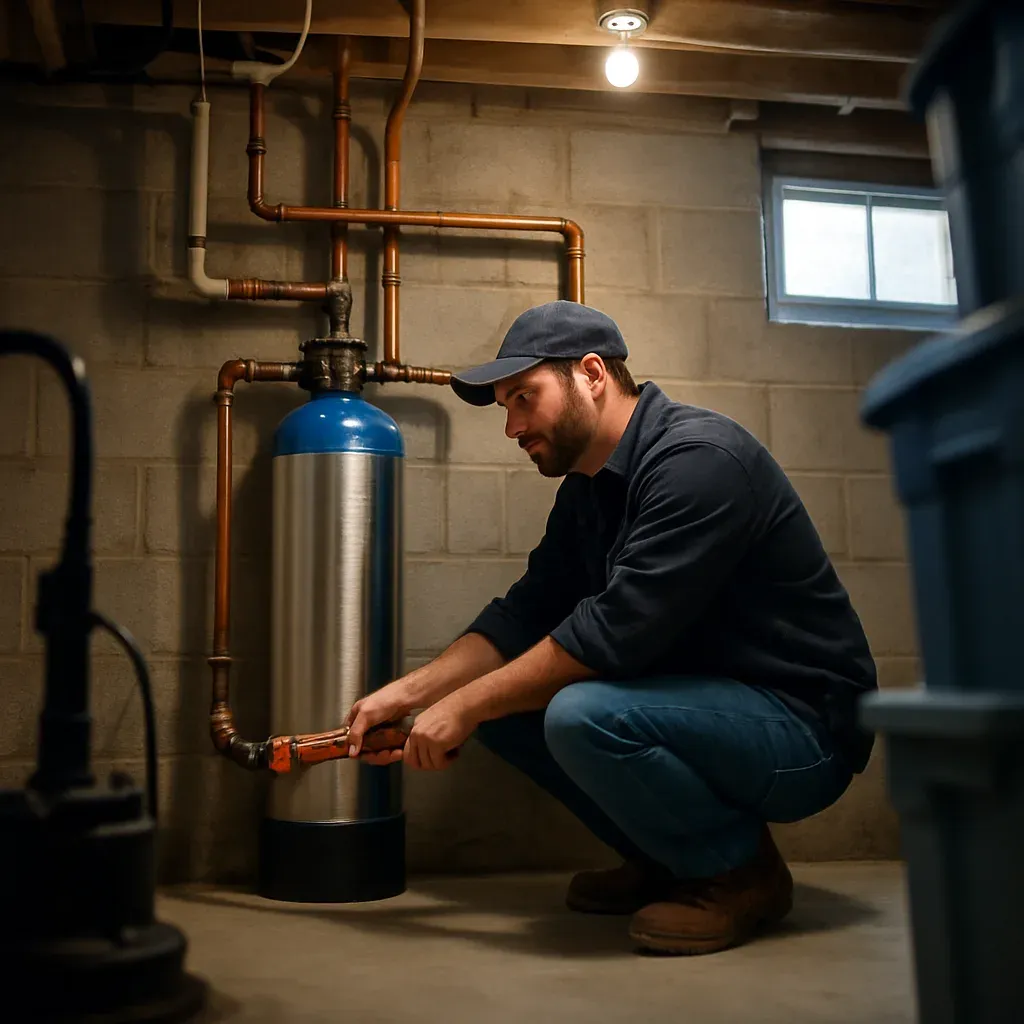
Physical installation typically happens near the main shutoff valve and ahead of the water heater, so all water entering the home, hot and cold, passes through the filter. This location also simplifies future filter changes and bypass valve access during maintenance.
- Water and usage assessment to determine contaminant load and flow rate needs
- System selection matched to test data rather than a one-size-fits-all unit
- Permit filing per Oregon plumbing code before altering the potable water line
- Installation near the main shutoff and ahead of the water heater
- System flush and post-install water re-test to confirm performance
After installation, the system is flushed to clear manufacturing residue and trapped air, then water is re-tested to confirm the filter is performing as expected. One local wrinkle: many older Sandy-area homes, particularly those built before the 1970s near the historic downtown corridor, still have galvanized piping. Corrosion and reduced interior diameter in these pipes can complicate finding a clean installation point or may require a short section of pipe replacement to restore proper flow and a secure connection.
Water Filtration
What Drives Installation Cost and Permit Requirements

Cost for whole-house water filtration installation isn't one flat number. It moves based on a few real factors, and knowing them helps you ask better questions before you hire anyone.
- Where your main water line enters the home, since older Sandy homes sometimes route it through crawl spaces that take longer to access
- The type of filtration system, whether it's sediment only or a combo unit with carbon and a water softener
- Whether your existing pipe size and pressure can handle the new unit without extra work
- Local permit fees, since tying into the main supply line usually requires a permit and inspection
- Any rerouting needed if your shutoff valve or water meter sits in an odd spot
Here's the thing nobody tells you upfront. Permits aren't optional paperwork, they protect you. When a system ties into your main water line, most jurisdictions want that inspected. Sandy is no different. If a system gets installed without the right permit, it can cause headaches later, especially when you go to sell the house.
We pull permits as part of the job because we're licensed, bonded and insured under CCB# 257405, and we'd rather do it right than cut a corner nobody sees until it's a problem.
Before you hire anyone for this kind of work, ask three things. Are they pulling a permit? Will they test your water hardness and sediment level before quoting a system? And do they explain why they're recommending one setup over another? A straight answer to those questions tells you a lot about who you're hiring.
Common Questions
Frequently Asked Questions
How do I know if my water in Sandy needs a whole-house filtration system?
+
You'll usually see the signs before you need a test kit. Orange staining in your sinks, a rotten-egg smell, or chalky buildup on your faucets all point to a problem worth fixing. In Sandy, this often comes from iron and manganese in the basalt aquifers along the Mt. Hood corridor. If the issue shows up in every faucet in your home instead of just one, that's a strong sign you need whole-house treatment, not a small filter.
How fast can you come test my water and give me a plan?
+
We schedule most water testing visits within the same week you call, sooner if you're dealing with sudden discoloration or a sulfur smell that wasn't there before. Sandy covers both city water and private wells, so we always test first instead of guessing at a system. That test tells us whether you're dealing with chlorine, sediment, iron, or hardness, and it shapes exactly what equipment we recommend.
What happens when you come out to install a whole-house system?
+
We start by confirming the water test results, then walk you through where the system will connect on your main line. Installation typically means shutting off water to the house for a short window while we tie in the filtration unit and any pressure tank needed. Before we leave, we run water through every fixture to check for leaks and confirm the system is filtering the way the test predicted.
Does it matter if I'm on well water or city water in Sandy?
+
Yes, it changes the whole approach. Homes on the City of Sandy's municipal water usually deal with chlorine taste or occasional sediment after main line work. Private wells near the foothills often carry iron, manganese, or hardness picked up from the basalt formations in the ground. We've tested water for homes out toward Marmot and Bull Run where the well source made iron removal the priority, not taste.
Is a whole-house system overkill if only one faucet tastes bad?
+
It might be. If your water test comes back clean for hardness, iron, and sediment, and only one faucet has a taste issue, a small under-sink filter often solves it completely. We'd rather tell you that upfront than install a bigger system you don't need. Whole-house setups make sense when the problem shows up throughout the home, not just at one tap.
How long does a whole-house filtration installation take?
+
Most installations take a few hours in a single visit, depending on your plumbing layout and the type of system going in. Homes needing extra equipment, like an iron filter paired with a softener for well water, can take a bit longer to plumb correctly. We'll give you a clear time estimate after we see your water test results and your existing pipe setup.
Need Plumbing Help?
Get Help Today from
Bigfoot Plumbing
Trusted plumbing for Sandy, Oregon and the surrounding Pacific Northwest. Honest pricing, dependable service, and a team that treats your home like family.
10% Off for Veterans · First Responders · Seniors